Add $300.00 to cart and get free shipping!
Your shopping bag is currently empty
Continue Shopping10 November 2025
Rubies Blood red to Budget friendly


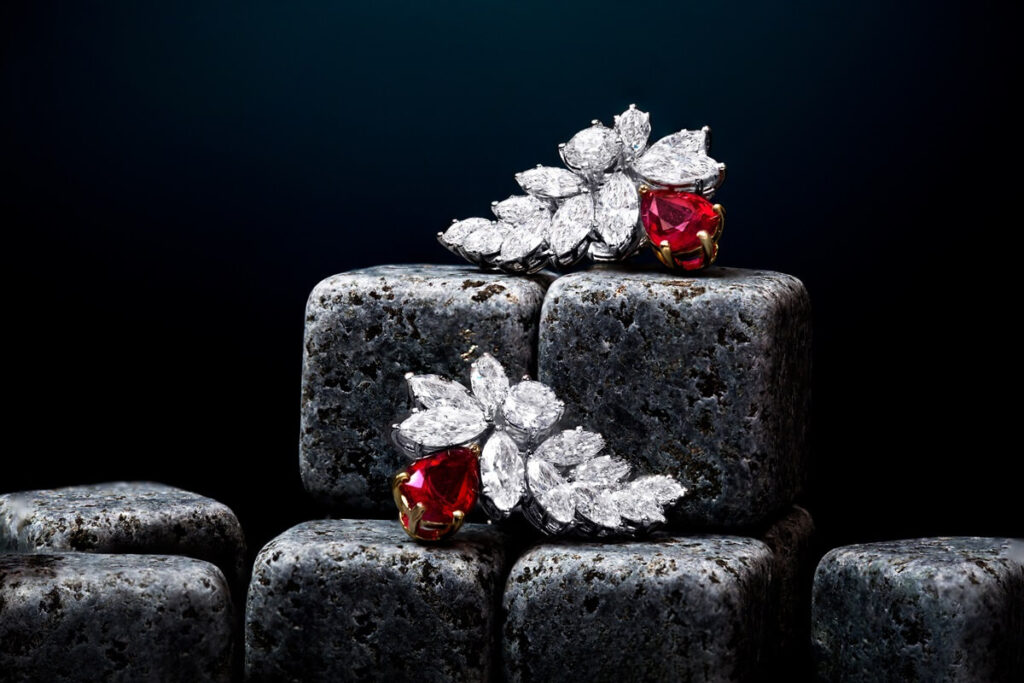
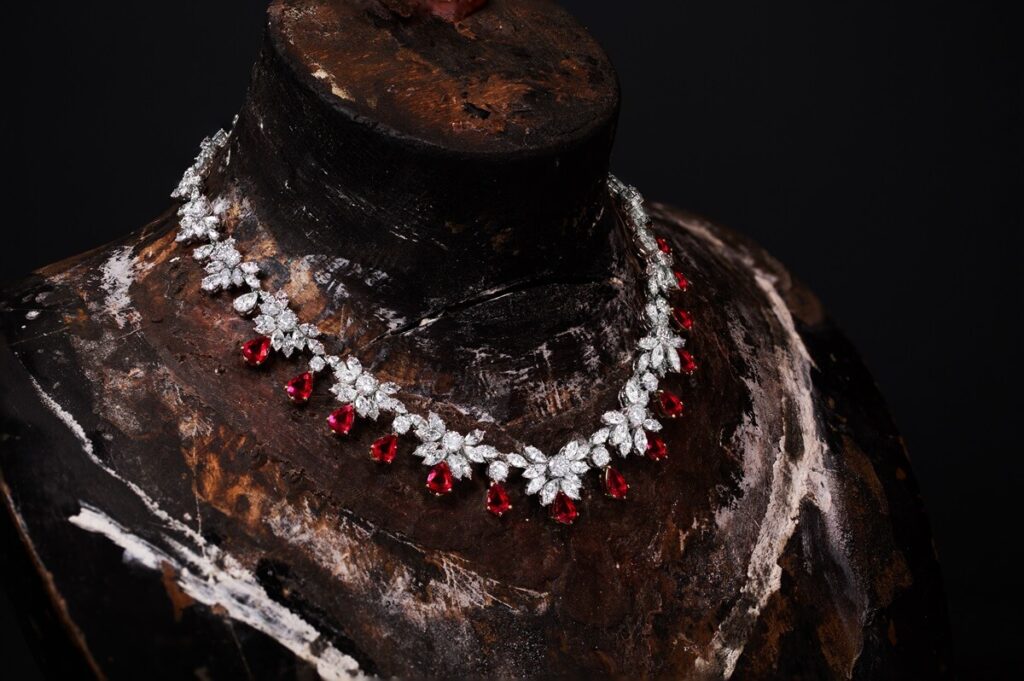
Burmese rubies have long been regarded as the gold standard of red gemstones. Drawn from the legendary mines of Mogok, Myanmar, these stones possess a saturation, glow, and inner fire that no other ruby origin has ever truly replicated. Their famed “pigeon blood” color—an intense, luminous red with a subtle hint of blue—has become the benchmark by which all rubies are measured.
Yet while Burmese rubies are among the most sought-after gemstones in the world, they do not exist in a single price category. Their market spans a wide and fascinating range—from collectible masterpieces commanding extraordinary sums to beautifully wearable stones that remain accessible to the discerning buyer.
Understanding this spectrum is the key to appreciating their true value.
What Makes Burmese Rubies Special
Rubies from Mogok are prized not simply for color, but for the way they interact with light. Unlike rubies from other regions, Burmese stones often display a soft, glowing fluorescence, giving them a sense of depth and vitality—almost as though the gem is lit from within.
This visual intensity, combined with centuries of royal and aristocratic patronage, has made Burmese rubies the most historically important ruby origin in the world.
But within Mogok itself, nature created stones of many qualities, not just museum-grade perfection.
Share on Social Media
The Three Price Tiers of Burmese Rubies
1. Investment-Grade Rubies
These are the stones that make headlines.
- Vivid “pigeon blood” color
- Excellent transparency
- Minimal inclusions
- No heat treatment
- GIA or SSEF certification
These rubies are rare beyond measure and command prices that can exceed those of diamonds per carat. They are typically purchased by collectors, investors, and high-jewelry maisons.
But this tier represents only a small fraction of what Mogok produces.
2. Fine Jewelry–Grade Burmese Rubies
This is where most of today’s luxury jewelry is made.
- Rich red to slightly purplish-red hues
- Some natural inclusions (typical of Mogok)
- Often lightly heat-treated
- Still luminous and vibrant
These stones retain the unmistakable Burmese character—the glow, the depth, the romance—but at a fraction of the price of ultra-rare collector stones. They are ideal for high jewelry, heirloom pieces, and bespoke creations, offering both beauty and origin prestige without entering investment-level pricing.
3. Entry-Level Burmese Rubies
These rubies are often overlooked, yet they offer something quietly remarkable.
- Softer red tones
- More visible inclusions
- Still certified Burmese in origin
These stones allow clients to own a genuine piece of Mogok heritage at a far more accessible price point. While they may not be flawless, they still carry the signature Burmese warmth and depth that sets them apart from rubies of other origins.
Why Burmese Rubies Remain So Desirable
What makes Burmese rubies truly special is not perfection—it is personality.
The subtle variations in tone, the soft internal glow, the tiny inclusions that reveal their natural birth—all of these give Mogok rubies their emotional and visual power. Even stones that do not qualify as “pigeon blood” still possess a richness that many technically cleaner rubies from other origins lack.
This is why Burmese rubies remain so coveted by designers, collectors, and connoisseurs alike.
Luxury Without Excess
There is a common misconception that Burmese rubies must always be astronomically expensive. In reality, the Mogok mines have produced stones for every tier of fine jewelry, from royal treasures to intimate heirlooms.
With thoughtful selection and expert sourcing, it is possible to own a Burmese ruby that offers:
Authentic origin
Exceptional beauty
Emotional and cultural value
—without reaching the stratospheric prices of investment-grade gems.
In this way, Burmese rubies remain what they have always been:
not just rare, but deeply meaningful.
They are stones of history, romance, and light—meant not only to be admired, but to be worn, loved, and passed forward.